Showing Food Asparagus
| General Information | |||||||||||
|---|---|---|---|---|---|---|---|---|---|---|---|
| Name | Asparagus | ||||||||||
| Scientific Name | Asparagus officinalis | ||||||||||
| Description | Asparagus officinalis is a spring vegetable, a flowering perennial plant species in the genus Asparagus. It was once classified in the lily family, like its Allium cousins, onions and garlic, but the Liliaceae have been split and the onion-like plants are now in the family Amaryllidaceae and asparagus in the Asparagaceae. Asparagus officinalis is native to most of Europe, northern Africa and western Asia, and is widely cultivated as a vegetable crop. | ||||||||||
| Primary ID | FOOD00021 | ||||||||||
| Picture | 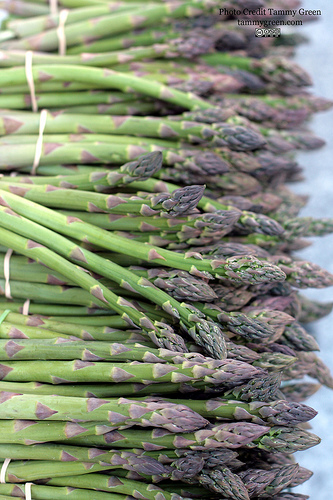 | ||||||||||
| Classification | |||||||||||
| Group | Vegetables | ||||||||||
| Sub-Group | Shoot vegetables | ||||||||||
| Taxonomy | |||||||||||
| Superkingdom | Eukaryota | ||||||||||
| Kingdom | Viridiplantae | ||||||||||
| Phylum | Streptophyta | ||||||||||
| Class | Magnoliopsida | ||||||||||
| Order | Asparagales | ||||||||||
| Family | Asparagaceae | ||||||||||
| Genus | Asparagus | ||||||||||
| Species | officinalis | ||||||||||
| Variety | Not Available | ||||||||||
| External Links | |||||||||||
| ITIS ID | 42784 | ||||||||||
| Wikipedia ID | Asparagus | ||||||||||
| Composition | |||||||||||
| Compounds |
Processing... | ||||||||||
| Macronutrients |
Processing... | ||||||||||
| References | |||||||||||
| Content Reference | — Duke, James. 'Dr. Duke's Phytochemical and Ethnobotanical Databases. United States Department of Agriculture.' Agricultural Research Service, Accessed April 27 (2004). — Saxholt, E., et al. 'Danish food composition databank, revision 7.' Department of Nutrition, National Food Institute, Technical University of Denmark (2008). — U.S. Department of Agriculture, Agricultural Research Service. 2008. USDA National Nutrient Database for Standard Reference, Release 21. Nutrient Data Laboratory Home Page. — Rothwell JA, Pérez-Jiménez J, Neveu V, Medina-Ramon A, M'Hiri N, Garcia Lobato P, Manach C, Knox K, Eisner R, Wishart D, Scalbert A. (2013) Phenol-Explorer 3.0: a major update of the Phenol-Explorer database to incorporate data on the effects of food processing on polyphenol content. Database, 10.1093/database/bat070. — Shinbo, Y., et al. 'KNApSAcK: a comprehensive species-metabolite relationship database.' Plant Metabolomics. Springer Berlin Heidelberg, 2006. 165-181. | ||||||||||