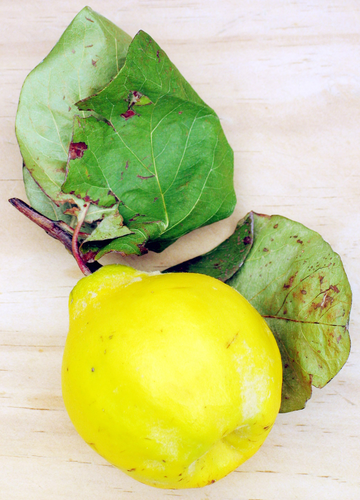
Showing Food Quince
| General Information | |||||||||||
|---|---|---|---|---|---|---|---|---|---|---|---|
| Name | Quince | ||||||||||
| Scientific Name | Cydonia oblonga | ||||||||||
| Description | Quince (Cydonia oblonga) is a deciduous tree native to the Caucasus region and parts of Asia, commonly cultivated in Europe, North Africa, and the Middle East. The fruit is mostly eaten in the Middle East, Mediterranean, and Latin America. Quince is used in jams, marmalades, pastes, and alcoholic beverages, due to its tartness and hard texture. The fruit has a bright golden-yellow color, a strong, sweet, and slightly tart taste, and a fragrant, floral odor. Quince is rich in antioxidants, vitamins, and minerals, providing various health benefits, including anti-inflammatory and antimicrobial properties (PMID: 35661598). The most notable chemical in quince is quercetin, a flavonoid with antioxidant properties. Quince has been used in traditional medicine for its antiseptic and anti-inflammatory properties (PMID: 27445806). Peculiarly, quince is often cooked with sugar to balance its tartness, and its seeds are used to produce a fragrant oil. | ||||||||||
| Primary ID | FOOD00069 | ||||||||||
| Picture | |||||||||||
| Classification | |||||||||||
| Group | Fruits | ||||||||||
| Sub-Group | Pomes | ||||||||||
| Taxonomy | |||||||||||
| Superkingdom | Eukaryota | ||||||||||
| Kingdom | Viridiplantae | ||||||||||
| Phylum | Streptophyta | ||||||||||
| Class | Magnoliopsida | ||||||||||
| Order | Rosales | ||||||||||
| Family | Rosaceae | ||||||||||
| Genus | Cydonia | ||||||||||
| Species | oblonga | ||||||||||
| Variety | Not Available | ||||||||||
| External Links | |||||||||||
| ITIS ID | 25159 | ||||||||||
| Wikipedia ID | Quince | ||||||||||
| Composition | |||||||||||
| Compounds |
| ||||||||||
| Macronutrients |
| ||||||||||
| Micronutrients |
| ||||||||||
| References | |||||||||||
| Content Reference | 9 unique sources. Numbers in the composition tables above point here. Show sources
| ||||||||||