Showing Food Japanese persimmon
| General Information | |||||||||||
|---|---|---|---|---|---|---|---|---|---|---|---|
| Name | Japanese persimmon | ||||||||||
| Scientific Name | Diospyros kaki | ||||||||||
| Description | Diospyros kaki, better known as the Japanese Persimmon, Kaki Persimmon (kaki [?]) or Asian Persimmon in North America, is the most widely cultivated species of the Diospyros genus. Although its first published botanical description was not until 1780, the kaki is also among the oldest plants in cultivation, known for its use in China for more than 2000 years. In some rural Chinese communities, the kaki fruit is seen as having a great mystical power that can be harnessed to solve headaches, back pains and foot ache . | ||||||||||
| Primary ID | FOOD00073 | ||||||||||
| Picture | 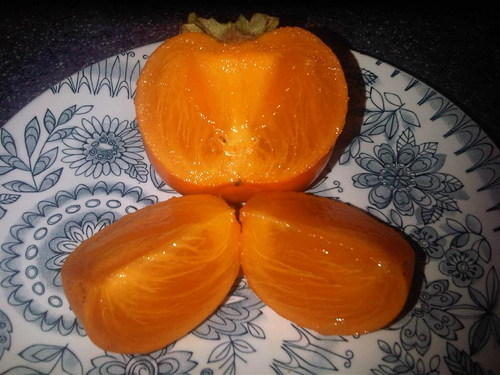 | ||||||||||
| Classification | |||||||||||
| Group | Fruits | ||||||||||
| Sub-Group | Tropical fruits | ||||||||||
| Taxonomy | |||||||||||
| Superkingdom | Eukaryota | ||||||||||
| Kingdom | Viridiplantae | ||||||||||
| Phylum | Streptophyta | ||||||||||
| Class | Magnoliopsida | ||||||||||
| Order | Ericales | ||||||||||
| Family | Ebenaceae | ||||||||||
| Genus | Diospyros | ||||||||||
| Species | kaki | ||||||||||
| Variety | Not Available | ||||||||||
| External Links | |||||||||||
| ITIS ID | 505970 | ||||||||||
| Wikipedia ID | Japanese_persimmon | ||||||||||
| Composition | |||||||||||
| Compounds |
Processing... | ||||||||||
| Macronutrients |
Processing... | ||||||||||
| References | |||||||||||
| Content Reference | — U.S. Department of Agriculture, Agricultural Research Service. 2008. USDA National Nutrient Database for Standard Reference, Release 21. Nutrient Data Laboratory Home Page. — Rothwell JA, Pérez-Jiménez J, Neveu V, Medina-Ramon A, M'Hiri N, Garcia Lobato P, Manach C, Knox K, Eisner R, Wishart D, Scalbert A. (2013) Phenol-Explorer 3.0: a major update of the Phenol-Explorer database to incorporate data on the effects of food processing on polyphenol content. Database, 10.1093/database/bat070. — Duke, James. 'Dr. Duke's Phytochemical and Ethnobotanical Databases. United States Department of Agriculture.' Agricultural Research Service, Accessed April 27 (2004). — Shinbo, Y., et al. 'KNApSAcK: a comprehensive species-metabolite relationship database.' Plant Metabolomics. Springer Berlin Heidelberg, 2006. 165-181. | ||||||||||