Showing Food Sweet potato
| General Information | |||||||||||
|---|---|---|---|---|---|---|---|---|---|---|---|
| Name | Sweet potato | ||||||||||
| Scientific Name | Ipomoea batatas | ||||||||||
| Description | The sweet potato (Ipomoea batatas) is a dicotyledonous plant that belongs to the family Convolvulaceae. Its large, starchy, sweet-tasting, tuberous roots are a root vegetable. The young leaves and shoots are sometimes eaten as greens. The sweet potato is only distantly related to the potato (Solanum tuberosum) and does not belong to the nightshade family, Solanaceae, but both families belong to the same taxonomic order, the Solanales. (Wikipedia) | ||||||||||
| Primary ID | FOOD00092 | ||||||||||
| Picture | 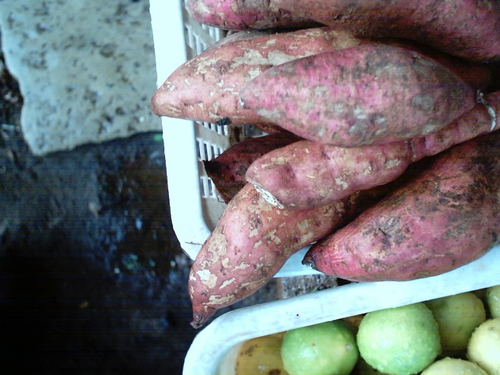 | ||||||||||
| Classification | |||||||||||
| Group | Vegetables | ||||||||||
| Sub-Group | Tubers | ||||||||||
| Taxonomy | |||||||||||
| Superkingdom | Eukaryota | ||||||||||
| Kingdom | Viridiplantae | ||||||||||
| Phylum | Streptophyta | ||||||||||
| Class | Magnoliopsida | ||||||||||
| Order | Solanales | ||||||||||
| Family | Convolvulaceae | ||||||||||
| Genus | Ipomoea | ||||||||||
| Species | batatas | ||||||||||
| Variety | Not Available | ||||||||||
| External Links | |||||||||||
| ITIS ID | 30764 | ||||||||||
| Wikipedia ID | Sweet Potato Pie (album) | ||||||||||
| Composition | |||||||||||
| Compounds |
Processing... | ||||||||||
| Macronutrients |
Processing... | ||||||||||
| References | |||||||||||
| Content Reference | — Duke, James. 'Dr. Duke's Phytochemical and Ethnobotanical Databases. United States Department of Agriculture.' Agricultural Research Service, Accessed April 27 (2004). — Saxholt, E., et al. 'Danish food composition databank, revision 7.' Department of Nutrition, National Food Institute, Technical University of Denmark (2008). — U.S. Department of Agriculture, Agricultural Research Service. 2008. USDA National Nutrient Database for Standard Reference, Release 21. Nutrient Data Laboratory Home Page. — Shinbo, Y., et al. 'KNApSAcK: a comprehensive species-metabolite relationship database.' Plant Metabolomics. Springer Berlin Heidelberg, 2006. 165-181. | ||||||||||