Showing Food Black walnut
| General Information | |||||||||||
|---|---|---|---|---|---|---|---|---|---|---|---|
| Name | Black walnut | ||||||||||
| Scientific Name | Juglans nigra | ||||||||||
| Description | Juglans nigra, the eastern black walnut, a species of flowering tree in the walnut family, Juglandaceae, is native to eastern North America. It grows mostly in riparian zones, from southern Ontario, west to southeast South Dakota, south to Georgia, northern Florida and southwest to central Texas. Isolated wild trees in the upper Ottawa Valley may be an isolated native population or may have derived from planted trees. Black walnut nuts are shelled commercially in the United States. The nutmeats provide a robust, distinctive, natural flavor and crunch as a food ingredient. Popular uses include ice cream, bakery goods and confections. Consumers include black walnuts in traditional treats, such as cakes, cookies, fudge, and pies, during the fall holiday season. The nuts' nutritional profile leads to uses in other foods, such as salads, fish, pork, chicken, vegetables and pasta dishes. | ||||||||||
| Primary ID | FOOD00093 | ||||||||||
| Picture | 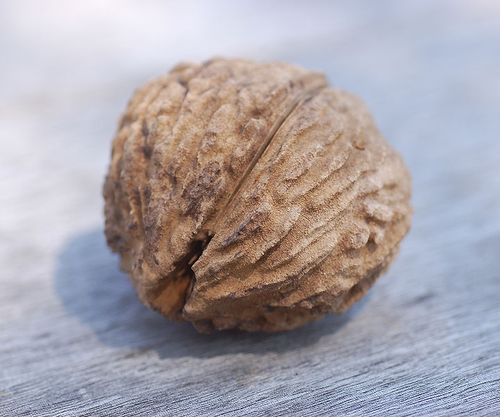 | ||||||||||
| Classification | |||||||||||
| Group | Nuts | ||||||||||
| Sub-Group | Nuts | ||||||||||
| Taxonomy | |||||||||||
| Superkingdom | Eukaryota | ||||||||||
| Kingdom | Viridiplantae | ||||||||||
| Phylum | Streptophyta | ||||||||||
| Class | Magnoliopsida | ||||||||||
| Order | Fagales | ||||||||||
| Family | Juglandaceae | ||||||||||
| Genus | Juglans | ||||||||||
| Species | nigra | ||||||||||
| Variety | Not Available | ||||||||||
| External Links | |||||||||||
| ITIS ID | 19254 | ||||||||||
| Wikipedia ID | Black_walnut | ||||||||||
| Composition | |||||||||||
| Compounds |
Processing... | ||||||||||
| Macronutrients |
Processing... | ||||||||||
| References | |||||||||||
| Content Reference | — Duke, James. 'Dr. Duke's Phytochemical and Ethnobotanical Databases. United States Department of Agriculture.' Agricultural Research Service, Accessed April 27 (2004). — U.S. Department of Agriculture, Agricultural Research Service. 2008. USDA National Nutrient Database for Standard Reference, Release 21. Nutrient Data Laboratory Home Page. — Shinbo, Y., et al. 'KNApSAcK: a comprehensive species-metabolite relationship database.' Plant Metabolomics. Springer Berlin Heidelberg, 2006. 165-181. — Saxholt, E., et al. 'Danish food composition databank, revision 7.' Department of Nutrition, National Food Institute, Technical University of Denmark (2008). | ||||||||||