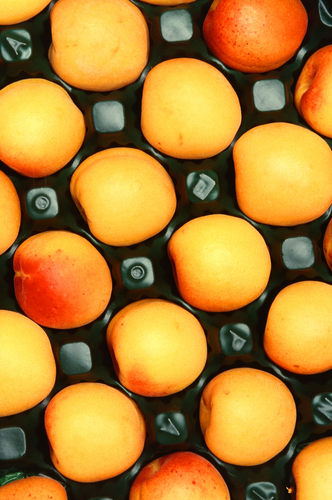
Showing Food Apricot
| General Information | |||||||||||
|---|---|---|---|---|---|---|---|---|---|---|---|
| Name | Apricot | ||||||||||
| Scientific Name | Prunus armeniaca | ||||||||||
| Description | Apricot, Prunus armeniaca, is a stonefruit native to Central Asia, specifically Armenia and China. It is widely consumed in Mediterranean countries, the United States, and Australia. The fruit is typically yellow to orange in color, often with a red tinge, and has a smooth or velvety surface. Its taste ranges from sweet to tart, with a succulent flesh. Apricots are commonly eaten fresh, but can also be processed into jam, juice, frozen, canned, or dried. The kernel, however, has limited culinary use due to its amygdalin content. Apricots are rich in water (86%), carbohydrates (11%), and low in protein (1%) and fat (<1%). The fruit is a good source of vitamin A and potassium, offering health benefits such as improved vision and heart health. The most notable chemical in apricots is amygdalin, a cyanogenic glycoside (PMID: 33598208, PMID: 35890519). Apricot kernel oil is used in cosmetics and pharmaceuticals, while the fruit itself has been used in traditional medicine to treat various ailments. A peculiar mode of preparation is the use of apricot kernels as a flavoring agent in some traditional desserts, despite their limited culinary use. | ||||||||||
| Primary ID | FOOD00144 | ||||||||||
| Picture | |||||||||||
| Classification | |||||||||||
| Group | Fruits | ||||||||||
| Sub-Group | Drupes | ||||||||||
| Taxonomy | |||||||||||
| Superkingdom | Eukaryota | ||||||||||
| Kingdom | Viridiplantae | ||||||||||
| Phylum | Streptophyta | ||||||||||
| Class | Magnoliopsida | ||||||||||
| Order | Rosales | ||||||||||
| Family | Rosaceae | ||||||||||
| Genus | Prunus | ||||||||||
| Species | armeniaca | ||||||||||
| External Links | |||||||||||
| ITIS ID | 24769 | ||||||||||
| Wikipedia ID | Apricot | ||||||||||
| Composition | |||||||||||
| Compounds |
| ||||||||||
| Macronutrients |
| ||||||||||
| Micronutrients |
| ||||||||||
| References | |||||||||||
| Content Reference | 9 unique sources. Numbers in the composition tables above point here. Show sources
| ||||||||||