Showing Food Cherry tomato
| General Information | |||||||||||
|---|---|---|---|---|---|---|---|---|---|---|---|
| Name | Cherry tomato | ||||||||||
| Scientific Name | Solanum lycopersicum var. cerasiforme | ||||||||||
| Description | A cherry tomato is a very small variety of tomato that has been cultivated since at least the early 1800s and thought to have originated in Peru and Northern Chile. Cherry tomatoes range in size from a thumbtip up to the size of a golf ball, and can range from being spherical to slightly oblong in shape. The more oblong ones often share characteristics with plum tomatoes, and are known as grape tomatoes. The berry tomato is regarded as a botanical variety of the cultivated berry, Solanum lycopersicum var. cerasiforme | ||||||||||
| Primary ID | FOOD00172 | ||||||||||
| Picture | 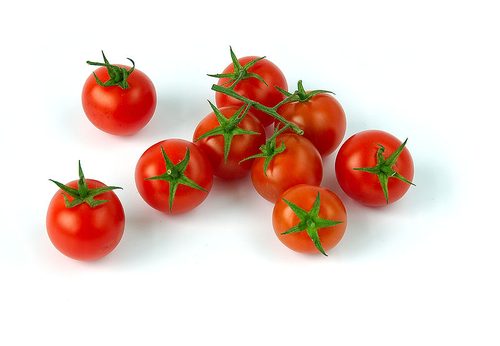 | ||||||||||
| Classification | |||||||||||
| Group | Vegetables | ||||||||||
| Sub-Group | Fruit vegetables | ||||||||||
| Taxonomy | |||||||||||
| Superkingdom | Eukaryota | ||||||||||
| Kingdom | Viridiplantae | ||||||||||
| Phylum | Streptophyta | ||||||||||
| Class | Magnoliopsida | ||||||||||
| Order | Solanales | ||||||||||
| Family | Solanaceae | ||||||||||
| Genus | Solanum | ||||||||||
| Species | lycopersicum | ||||||||||
| Variety | cerasiforme | ||||||||||
| External Links | |||||||||||
| ITIS ID | 566309 | ||||||||||
| Wikipedia ID | Cherry tomato | ||||||||||
| Composition | |||||||||||
| Compounds |
Processing... | ||||||||||
| Macronutrients |
Processing... | ||||||||||
| References | |||||||||||
| Content Reference | — Rothwell JA, Pérez-Jiménez J, Neveu V, Medina-Ramon A, M'Hiri N, Garcia Lobato P, Manach C, Knox K, Eisner R, Wishart D, Scalbert A. (2013) Phenol-Explorer 3.0: a major update of the Phenol-Explorer database to incorporate data on the effects of food processing on polyphenol content. Database, 10.1093/database/bat070. — Shinbo, Y., et al. 'KNApSAcK: a comprehensive species-metabolite relationship database.' Plant Metabolomics. Springer Berlin Heidelberg, 2006. 165-181. — U.S. Department of Agriculture, Agricultural Research Service. 2008. USDA National Nutrient Database for Standard Reference, Release 21. Nutrient Data Laboratory Home Page. | ||||||||||