Showing Food Pineappple sage
| General Information | |||||||||||||
|---|---|---|---|---|---|---|---|---|---|---|---|---|---|
| Name | Pineappple sage | ||||||||||||
| Scientific Name | Salvia elegans | ||||||||||||
| Description | Salvia elegans, commonly called Pineapple sage or Tangerine Sage, is a perennial shrub native to Mexico and Guatemala. It inhabits Madrean and Mesoamerican pine-oak forests between 6,000 and 9,000 ft (1,800 and 2,700 m). S. elegans has tubular red flowers and an attractive scent to the leaves that is similar to pineapple. The leaves and flowers of S. elegans are edible. The plant is extensively used in Mexican traditional medicine, especially for the treatment of anxiety, and also for lowering of blood pressure. Although scientific information about these medicinal properties is scarce, a preliminary study on mice found support for the plant potentially having antidepressant and antianxiety properties. Pineapple sage has also been shown to have a dose-dependent antihypertensive effect, attributed to its action as an angiotensin II receptor antagonist and inhibitor of the angiotensin converting enzyme. | ||||||||||||
| Primary ID | FOOD00266 | ||||||||||||
| Picture | 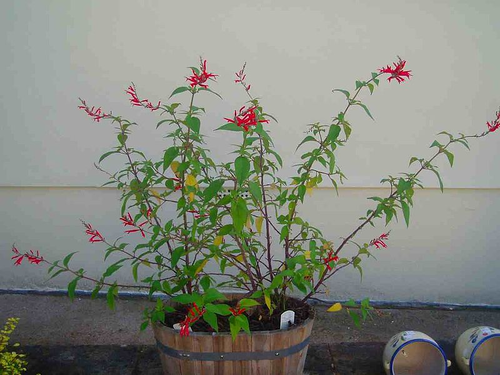 | ||||||||||||
| Classification | |||||||||||||
| Group | Herbs and Spices | ||||||||||||
| Sub-Group | Herbs | ||||||||||||
| Taxonomy | |||||||||||||
| Superkingdom | Eukaryota | ||||||||||||
| Kingdom | Viridiplantae | ||||||||||||
| Phylum | Streptophyta | ||||||||||||
| Class | Magnoliopsida | ||||||||||||
| Order | Lamiales | ||||||||||||
| Family | Lamiaceae | ||||||||||||
| Genus | Salvia | ||||||||||||
| Species | elegans | ||||||||||||
| Variety | Not Available | ||||||||||||
| External Links | |||||||||||||
| ITIS ID | 832880 | ||||||||||||
| Wikipedia ID | Salvia_elegans | ||||||||||||
| Composition | |||||||||||||
| Compounds |
Processing... | ||||||||||||
| Macronutrients |
Showing 0 to 0 of 0 entries | ||||||||||||
| References | |||||||||||||
| Content Reference | |||||||||||||