Showing Food Atlantic mackerel
| General Information | |||||||||||
|---|---|---|---|---|---|---|---|---|---|---|---|
| Name | Atlantic mackerel | ||||||||||
| Scientific Name | Scomber scombrus | ||||||||||
| Description | The Atlantic mackerel (Scomber scombrus), is a pelagic schooling species of mackerel found on both sides of the North Atlantic Ocean. The species is also called Boston mackerel, or just mackerel. The Atlantic Mackerel is by far the most common of the ten species of the family that are caught in British waters. It is extremely common in huge shoals migrating towards the coast to feed on small fish and prawns during the summer. Abundant in cold and temperate shelf areas, it forms large schools near the surface. They overwinter in deeper waters but move closer to shore in spring when water temperatures range between 11–14 °C (52–57 °F). In north-east Atlantic: North Sea (east) and British Isles (west). The North Sea stock decreased dramatically in the 1960s because of direct overfishing. Male and female Atlantic mackerel grow at about the same rate, reaching a maximum age of about 20 years and a maximum fork length of about 47 centimetres . Most Atlantic mackerel are sexually mature by the age of three years. | ||||||||||
| Primary ID | FOOD00293 | ||||||||||
| Picture | 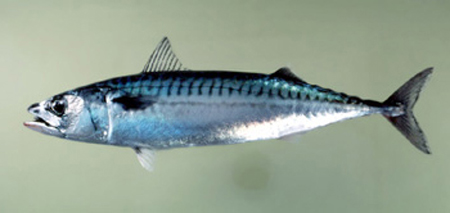 | ||||||||||
| Classification | |||||||||||
| Group | Aquatic foods | ||||||||||
| Sub-Group | Fishes | ||||||||||
| Taxonomy | |||||||||||
| Superkingdom | Eukaryota | ||||||||||
| Kingdom | Metazoa | ||||||||||
| Phylum | Chordata | ||||||||||
| Class | Actinopteri | ||||||||||
| Order | Scombriformes | ||||||||||
| Family | Scombridae | ||||||||||
| Genus | Scomber | ||||||||||
| Species | scombrus | ||||||||||
| Variety | Not Available | ||||||||||
| External Links | |||||||||||
| ITIS ID | 172414 | ||||||||||
| Wikipedia ID | Atlantic mackerel | ||||||||||
| Composition | |||||||||||
| Compounds |
Processing... | ||||||||||
| Macronutrients |
Processing... | ||||||||||
| References | |||||||||||
| Content Reference | — U.S. Department of Agriculture, Agricultural Research Service. 2008. USDA National Nutrient Database for Standard Reference, Release 21. Nutrient Data Laboratory Home Page. | ||||||||||