Showing Food Malus (Crab apple)
| General Information | |||||||||||
|---|---|---|---|---|---|---|---|---|---|---|---|
| Name | Malus (Crab apple) | ||||||||||
| Scientific Name | Malus | ||||||||||
| Description | Malus, apple, is a genus of about 30-55 species of small deciduous trees or shrubs in the family Rosaceae, including the domesticated orchard apple (M. domestica). The other species are generally known as crabapples, crab apples, crabs, or wild apples. The genus is native to the temperate zone of the Northern Hemisphere. The fruit is a globose pome, varying in size from 1-4 cm (0.39-1.57 in) diameter in most of the wild species, to 6 cm (2.4 in) in M. sylvestris sieversii, 8 cm (3.1 in) in M. domestica, and even larger in certain cultivated orchard apples. The centre of the fruit contains five carpels arranged star-like, each containing one or two seeds. | ||||||||||
| Primary ID | FOOD00343 | ||||||||||
| Picture | 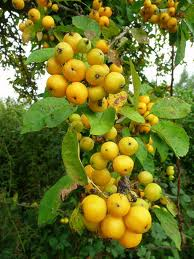 | ||||||||||
| Classification | |||||||||||
| Group | Fruits | ||||||||||
| Sub-Group | Pomes | ||||||||||
| External Links | |||||||||||
| ITIS ID | 25254 | ||||||||||
| Wikipedia ID | Malus | ||||||||||
| Composition | |||||||||||
| Compounds |
Processing... | ||||||||||
| Macronutrients |
Processing... | ||||||||||
| References | |||||||||||
| Content Reference | — Saxholt, E., et al. 'Danish food composition databank, revision 7.' Department of Nutrition, National Food Institute, Technical University of Denmark (2008). — U.S. Department of Agriculture, Agricultural Research Service. 2008. USDA National Nutrient Database for Standard Reference, Release 21. Nutrient Data Laboratory Home Page. — Shinbo, Y., et al. 'KNApSAcK: a comprehensive species-metabolite relationship database.' Plant Metabolomics. Springer Berlin Heidelberg, 2006. 165-181. | ||||||||||