Showing Food Prairie turnip
| General Information | |||||||||||
|---|---|---|---|---|---|---|---|---|---|---|---|
| Name | Prairie turnip | ||||||||||
| Scientific Name | Pediomelum esculentum | ||||||||||
| Description | Psoralea esculenta (prairie turnip) is an herbaceous perennial plant native to prairies and dry woodlands of central North America, which bears a starchy tuberous root edible as a root vegetable. The plant is also known as Pediomelum esculenta. English names for the plant include tipsin, teepsenee, breadroot, breadroot scurf pea, and pomme blanche. The prairie turnip was a staple food of the Plains Indians. A closely related species, Psoralea hypogaea, the little breadroot, is also edible, although the plant and root are smaller. Another species, Psoralea argophylla, was probably harvested for food only in times of famine. | ||||||||||
| Primary ID | FOOD00439 | ||||||||||
| Picture | 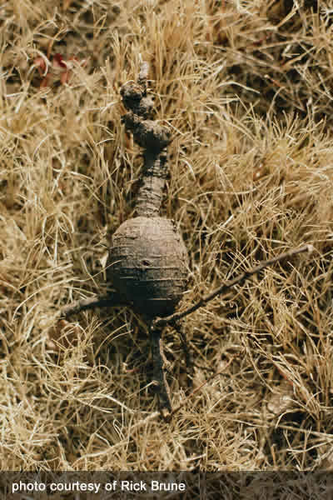 | ||||||||||
| Classification | |||||||||||
| Group | Vegetables | ||||||||||
| Sub-Group | Root vegetables | ||||||||||
| Taxonomy | |||||||||||
| Superkingdom | Eukaryota | ||||||||||
| Kingdom | Viridiplantae | ||||||||||
| Phylum | Streptophyta | ||||||||||
| Class | Magnoliopsida | ||||||||||
| Order | Fabales | ||||||||||
| Family | Fabaceae | ||||||||||
| Genus | Pediomelum | ||||||||||
| Species | esculentum | ||||||||||
| Variety | Not Available | ||||||||||
| External Links | |||||||||||
| ITIS ID | 504177 | ||||||||||
| Wikipedia ID | Psoralea esculenta | ||||||||||
| Composition | |||||||||||
| Compounds |
Processing... | ||||||||||
| Macronutrients |
Processing... | ||||||||||
| References | |||||||||||
| Content Reference | — Duke, James. 'Dr. Duke's Phytochemical and Ethnobotanical Databases. United States Department of Agriculture.' Agricultural Research Service, Accessed April 27 (2004). — U.S. Department of Agriculture, Agricultural Research Service. 2008. USDA National Nutrient Database for Standard Reference, Release 21. Nutrient Data Laboratory Home Page. | ||||||||||