Showing Food Leavening agent
| General Information | |||||||||||
|---|---|---|---|---|---|---|---|---|---|---|---|
| Name | Leavening agent | ||||||||||
| Scientific Name | Not Available | ||||||||||
| Description | A leavening agent is any one of a number of substances used in doughs and batters that causes a foaming action that lightens and softens the finished product. Formation of carbon dioxide is induced by chemical agents reacting with moisture, heat, acidity, or other triggers. The leavening agent incorporates gas bubbles into the dough. The alternative or supplement to leavening agents is mechanical leavening by which air is incorporated by mechanical means. Most leavening agents are synthetic chemical compounds, but carbon dioxide can also be produced by biological agents. When a dough or batter is mixed, the starch in the flour mixes with the water in the dough to form a matrix (often supported further by proteins like gluten or other polysaccharides like pentosans or xanthan gum), then gelatinizes and "sets"; the holes left by the gas bubbles remain. | ||||||||||
| Primary ID | FOOD00661 | ||||||||||
| Picture | 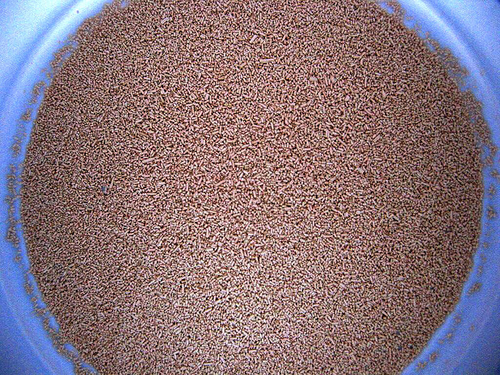 | ||||||||||
| Classification | |||||||||||
| Group | Baking goods | ||||||||||
| Sub-Group | Baking goods | ||||||||||
| External Links | |||||||||||
| ITIS ID | Not Available | ||||||||||
| Wikipedia ID | Leavening_agent | ||||||||||
| Composition | |||||||||||
| Compounds |
Processing... | ||||||||||
| Macronutrients |
Processing... | ||||||||||
| References | |||||||||||
| Content Reference | — Saxholt, E., et al. 'Danish food composition databank, revision 7.' Department of Nutrition, National Food Institute, Technical University of Denmark (2008). — U.S. Department of Agriculture, Agricultural Research Service. 2008. USDA National Nutrient Database for Standard Reference, Release 21. Nutrient Data Laboratory Home Page. | ||||||||||