Showing Food Cabbage
| General Information | |||||||||||
|---|---|---|---|---|---|---|---|---|---|---|---|
| Name | Cabbage | ||||||||||
| Scientific Name | Brassica oleracea var. capitata | ||||||||||
| Description | Cabbage (Brassica oleracea or variants) is a leafy green biennial, grown as an annual vegetable for its dense-leaved heads. Closely related to other cole crops, such as broccoli, cauliflower and brussels sprouts, it descends from B. oleracea var. oleracea, a wild field cabbage. Cabbage heads generally range from 1 to 8 pounds (to kg), and can be green, purple and white. Smooth-leafed firm-headed green cabbages are the most common, with smooth-leafed red and crinkle-leafed savoy cabbages of both colors seen more rarely. It is difficult to trace the exact history of cabbage, but it was most likely domesticated somewhere in Europe before 1000 BC. By the Middle Ages it was a prominent part of European cuisine, although savoys were not developed until the 16th century. Cabbage heads are generally picked during the first year of the plants' life cycles, but those intended for seed are allowed to grow a second year, and must be kept separated from other cole crops to prevent cross pollination. Cabbage is prone to several nutrient deficiencies, as well as multiple pests, bacteria and fungal diseases. The Food and Agriculture Organization of the United Nations (FAO) reports that world production of cabbage and other brassicas (these plants are combined by the FAO for reporting purposes) for calendar year 2010 was almost 58,000,000 metric tons . Almost half were grown in China. Cabbages are prepared in many different ways for eating, although pickling, in dishes such as sauerkraut, is the most popular. Cabbage is a good source of beta-carotene, vitamin C and fiber. Cabbage when contaminated is sometimes a source of food-borne illness in humans. | ||||||||||
| Primary ID | FOOD00851 | ||||||||||
| Picture | 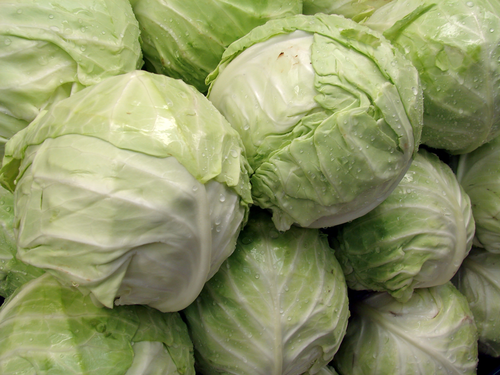 | ||||||||||
| Classification | |||||||||||
| Group | Vegetables | ||||||||||
| Sub-Group | Cabbages | ||||||||||
| Taxonomy | |||||||||||
| Superkingdom | Eukaryota | ||||||||||
| Kingdom | Viridiplantae | ||||||||||
| Phylum | Streptophyta | ||||||||||
| Class | Magnoliopsida | ||||||||||
| Order | Brassicales | ||||||||||
| Family | Brassicaceae | ||||||||||
| Genus | Brassica | ||||||||||
| Species | oleracea | ||||||||||
| Variety | capitata | ||||||||||
| External Links | |||||||||||
| ITIS ID | 526962 | ||||||||||
| Wikipedia ID | Cabbage | ||||||||||
| Composition | |||||||||||
| Compounds |
Processing... | ||||||||||
| Macronutrients |
Processing... | ||||||||||
| References | |||||||||||
| Content Reference | — Duke, James. 'Dr. Duke's Phytochemical and Ethnobotanical Databases. United States Department of Agriculture.' Agricultural Research Service, Accessed April 27 (2004). — U.S. Department of Agriculture, Agricultural Research Service. 2008. USDA National Nutrient Database for Standard Reference, Release 21. Nutrient Data Laboratory Home Page. | ||||||||||