Record Information
Version1.0
Creation date2010-04-08 22:11:22 UTC
Update date2019-11-26 03:10:27 UTC
Primary IDFDB014613
Secondary Accession Numbers
  • FDB030672
Chemical Information
FooDB Namebeta-Carotene
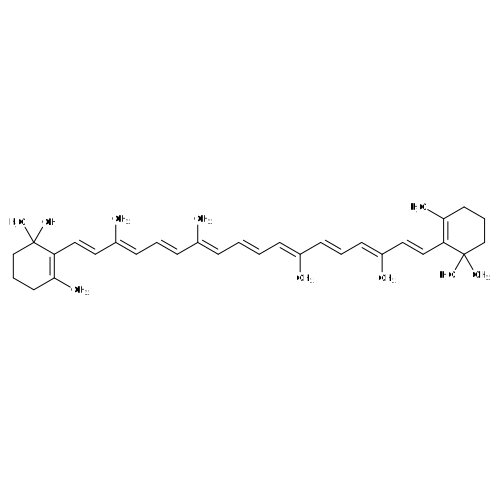
Descriptionbeta-Carotene, also known as b-karotin or β-carotene, belongs to the class of organic compounds known as carotenes. These are a type of unsaturated hydrocarbons containing eight consecutive isoprene units. They are characterized by the presence of two end-groups (mostly cyclohexene rings, but also cyclopentene rings or acyclic groups) linked by a long branched alkyl chain. Carotenes belonging form a subgroup of the carotenoids family. Thus, beta-carotene is considered to be an isoprenoid. Based on a literature review a significant number of articles have been published on beta-Carotene.
CAS Number7235-40-7
Structure
Thumb
Synonyms
SynonymSource
1,1'-[(1E,3E,5E,7E,9E,11E,13E,15E,17E)-3,7,12,16-Tetramethyloctadeca-1,3,5,7,9,11,13,15,17-nonaene-1,18-diyl]bis(2,6,6-trimethylcyclohexene)ChEBI
all-trans-beta-CaroteneChEBI
beta-KarotinChEBI
all-trans-b-CaroteneGenerator
all-trans-Β-caroteneGenerator
b-KarotinGenerator
Β-karotinGenerator
b-CaroteneGenerator
Β-caroteneGenerator
(all-e)-1,1'-(3,7,12,16-Tetramethyl-1,3,5,7,9,11,13,15,17-octadecanonaene-1,18-diyl)bisHMDB
(all-e)-1,1'-(3,7,12,16-Tetramethyl-1,3,5,7,9,11,13,15,17-octadecanonaene-1,18-diyl)bis[2,6,6-trimethyl-cyclohexeneHMDB
all-e-b-CaroteneHMDB
all-epsilon-beta-CaroteneHMDB
BetacaroteneHMDB
BetaVitHMDB
CarotabenHMDB
Carotene base 80SHMDB
FOOD Orange 5HMDB
KPMKHMDB
LucaratinHMDB
LucarotinHMDB
LurotinHMDB
ProvateneHMDB
ProvatenolHMDB
Rovimix b-caroteneHMDB
SerlaboHMDB
SolateneHMDB
Hermal brand OF betacaroteneHMDB
Max-caroHMDB
Merck brand OF betacaroteneHMDB
Roche brand OF betacaroteneHMDB
BellaCarotinHMDB
Betacarotene roche brandHMDB
Betacarotene solgar brandHMDB
Marlyn brand OF betacaroteneHMDB
Betacarotene hermal brandHMDB
Max caroHMDB
Solgar brand OF betacaroteneHMDB
3m Brand OF betacaroteneHMDB
Betacarotene 3m brandHMDB
Betacarotene marlyn brandHMDB
Betacarotene merck brandHMDB
Carotene, betaHMDB
MaxCaroHMDB
VetoronHMDB
beta CaroteneHMDB
b CaroteneHMDB
Β caroteneHMDB
beta-CaroteneHMDB
β-Carotenebiospider
β,β-Carotenebiospider
1,1'-[(1e,3e,5e,7e,9e,11e,13e,15e,17e)-3,7,12,16-Tetramethyloctadeca-1,3,5,7,9,11,13,15,17-nonaene-1,18-diyl]bis(2,6,6-trimethylcyclohexene)ChEBI
all-trans-β-caroteneGenerator
b,b-Carotenedb_source
Betacarotene, INN, USANdb_source
C.I. Food Orange 5biospider
E160adb_source
Food Orange 5biospider
Phenorodb_source
trans-b-carotenebiospider
β-caroteneGenerator
β-karotinGenerator
Predicted Properties
PropertyValueSource
Water Solubility0.00039 g/LALOGPS
logP9.72ALOGPS
logP11.12ChemAxon
logS-6.1ALOGPS
Physiological Charge0ChemAxon
Hydrogen Acceptor Count0ChemAxon
Hydrogen Donor Count0ChemAxon
Polar Surface Area0 ŲChemAxon
Rotatable Bond Count10ChemAxon
Refractivity191.61 m³·mol⁻¹ChemAxon
Polarizability72.05 ųChemAxon
Number of Rings2ChemAxon
BioavailabilityNoChemAxon
Rule of FiveNoChemAxon
Ghose FilterNoChemAxon
Veber's RuleYesChemAxon
MDDR-like RuleNoChemAxon
Chemical FormulaC40H56
IUPAC name1,3,3-trimethyl-2-[(1E,3E,5E,7E,9E,11E,13E,15E,17E)-3,7,12,16-tetramethyl-18-(2,6,6-trimethylcyclohex-1-en-1-yl)octadeca-1,3,5,7,9,11,13,15,17-nonaen-1-yl]cyclohex-1-ene
InChI IdentifierInChI=1S/C40H56/c1-31(19-13-21-33(3)25-27-37-35(5)23-15-29-39(37,7)8)17-11-12-18-32(2)20-14-22-34(4)26-28-38-36(6)24-16-30-40(38,9)10/h11-14,17-22,25-28H,15-16,23-24,29-30H2,1-10H3/b12-11+,19-13+,20-14+,27-25+,28-26+,31-17+,32-18+,33-21+,34-22+
InChI KeyOENHQHLEOONYIE-JLTXGRSLSA-N
Isomeric SMILESC\C(\C=C\C=C(/C)\C=C\C1=C(C)CCCC1(C)C)=C/C=C/C=C(\C)/C=C/C=C(\C)/C=C/C1=C(C)CCCC1(C)C
Average Molecular Weight536.888
Monoisotopic Molecular Weight536.438201803
Classification
Description Belongs to the class of organic compounds known as carotenes. These are a type of unsaturated hydrocarbons containing eight consecutive isoprene units. They are characterized by the presence of two end-groups (mostly cyclohexene rings, but also cyclopentene rings or acyclic groups) linked by a long branched alkyl chain. Carotenes belonging form a subgroup of the carotenoids family.
KingdomOrganic compounds
Super ClassLipids and lipid-like molecules
ClassPrenol lipids
Sub ClassTetraterpenoids
Direct ParentCarotenes
Alternative Parents
Substituents
  • Carotene
  • Branched unsaturated hydrocarbon
  • Cycloalkene
  • Cyclic olefin
  • Unsaturated aliphatic hydrocarbon
  • Unsaturated hydrocarbon
  • Olefin
  • Hydrocarbon
  • Aliphatic homomonocyclic compound
Molecular FrameworkAliphatic homomonocyclic compounds
External Descriptors
Ontology
OntologyNo ontology term
Physico-Chemical Properties
Physico-Chemical Properties - Experimental
PropertyValueReference
Physical stateSolid
Physical DescriptionNot Available
Mass CompositionC 89.49%; H 10.51%DFC
Melting PointMp 183° (sealed tube)DFC
Boiling PointNot Available
Experimental Water Solubility0.0006 mg/mLGREEN,FJ (1991)
Experimental logPNot Available
Experimental pKaNot Available
Isoelectric pointNot Available
ChargeNot Available
Optical RotationNot Available
Spectroscopic UV Data520 () (CS2)DFC
DensityNot Available
Refractive IndexNot Available
Spectra
Spectra
EI-MS/GC-MS
TypeDescriptionSplash KeyView
EI-MSMass Spectrum (Electron Ionization)splash10-05mx-9810010000-9a261fb8602890c2481e2015-03-01View Spectrum
Predicted GC-MSCarotene, non-derivatized, Predicted GC-MS Spectrum - 70eV, Positivesplash10-00di-3211290000-f968c686d39ae0f0fc50Spectrum
MS/MS
TypeDescriptionSplash KeyView
MS/MSLC-MS/MS Spectrum - Quattro_QQQ 10V, Positive (Annotated)splash10-0016-2794670000-c5bc2a4dbcd0f12cbf7f2012-07-24View Spectrum
MS/MSLC-MS/MS Spectrum - Quattro_QQQ 25V, Positive (Annotated)splash10-0002-2687970000-782d048d873c21fc6b822012-07-24View Spectrum
MS/MSLC-MS/MS Spectrum - Quattro_QQQ 40V, Positive (Annotated)splash10-05ai-1009510000-585581456b10671692bd2012-07-24View Spectrum
MS/MSLC-MS/MS Spectrum - FAB-EBEB (JMS-HX/HX 110A, JEOL) , Positivesplash10-05mx-2920010000-471219f3e66bafb29bee2012-08-31View Spectrum
MS/MSLC-MS/MS Spectrum - , positivesplash10-0006-0144900000-2fa7b609c7300ff8aba32017-09-14View Spectrum
Predicted MS/MSPredicted LC-MS/MS Spectrum - 10V, Positivesplash10-000i-0434190000-0f2f0f2c4af76e6c33222016-09-12View Spectrum
Predicted MS/MSPredicted LC-MS/MS Spectrum - 20V, Positivesplash10-000b-0679100000-6f4450c8ade1963f92012016-09-12View Spectrum
Predicted MS/MSPredicted LC-MS/MS Spectrum - 40V, Positivesplash10-000j-1789100000-6f2a7024e42303e7737a2016-09-12View Spectrum
Predicted MS/MSPredicted LC-MS/MS Spectrum - 10V, Negativesplash10-000i-0000090000-cdea7c2d939f0c68b9052016-09-12View Spectrum
Predicted MS/MSPredicted LC-MS/MS Spectrum - 20V, Negativesplash10-000i-0000090000-530c81799c9daabdc9bf2016-09-12View Spectrum
Predicted MS/MSPredicted LC-MS/MS Spectrum - 40V, Negativesplash10-014i-0968170000-ec71ee19e546088e3b052016-09-12View Spectrum
Predicted MS/MSPredicted LC-MS/MS Spectrum - 10V, Positivesplash10-000j-0277960000-5b1eef16ffbc2ccd4b1e2021-09-24View Spectrum
Predicted MS/MSPredicted LC-MS/MS Spectrum - 20V, Positivesplash10-0081-0449400000-e362d306c4b151321fb62021-09-24View Spectrum
Predicted MS/MSPredicted LC-MS/MS Spectrum - 40V, Positivesplash10-0iki-0149200000-5b858e5700ff1d750a4e2021-09-24View Spectrum
Predicted MS/MSPredicted LC-MS/MS Spectrum - 10V, Negativesplash10-000i-0001090000-b0a4df7c3417e82842d72021-09-24View Spectrum
Predicted MS/MSPredicted LC-MS/MS Spectrum - 20V, Negativesplash10-000j-0135090000-fb91b96b3605a056f12f2021-09-24View Spectrum
Predicted MS/MSPredicted LC-MS/MS Spectrum - 40V, Negativesplash10-0apj-0229000000-23e454829ef21fbedf662021-09-24View Spectrum
NMR
TypeDescriptionView
1D NMR13C NMR Spectrum (1D, 100 MHz, H2O, predicted)Spectrum
1D NMR1H NMR Spectrum (1D, 100 MHz, H2O, predicted)Spectrum
1D NMR13C NMR Spectrum (1D, 1000 MHz, H2O, predicted)Spectrum
1D NMR1H NMR Spectrum (1D, 1000 MHz, H2O, predicted)Spectrum
1D NMR13C NMR Spectrum (1D, 200 MHz, H2O, predicted)Spectrum
1D NMR1H NMR Spectrum (1D, 200 MHz, H2O, predicted)Spectrum
1D NMR13C NMR Spectrum (1D, 300 MHz, H2O, predicted)Spectrum
1D NMR1H NMR Spectrum (1D, 300 MHz, H2O, predicted)Spectrum
1D NMR13C NMR Spectrum (1D, 400 MHz, H2O, predicted)Spectrum
1D NMR1H NMR Spectrum (1D, 400 MHz, H2O, predicted)Spectrum
1D NMR13C NMR Spectrum (1D, 500 MHz, H2O, predicted)Spectrum
1D NMR1H NMR Spectrum (1D, 500 MHz, H2O, predicted)Spectrum
1D NMR13C NMR Spectrum (1D, 600 MHz, H2O, predicted)Spectrum
1D NMR1H NMR Spectrum (1D, 600 MHz, H2O, predicted)Spectrum
1D NMR13C NMR Spectrum (1D, 700 MHz, H2O, predicted)Spectrum
1D NMR1H NMR Spectrum (1D, 700 MHz, H2O, predicted)Spectrum
1D NMR13C NMR Spectrum (1D, 800 MHz, H2O, predicted)Spectrum
1D NMR1H NMR Spectrum (1D, 800 MHz, H2O, predicted)Spectrum
1D NMR13C NMR Spectrum (1D, 900 MHz, H2O, predicted)Spectrum
1D NMR1H NMR Spectrum (1D, 900 MHz, H2O, predicted)Spectrum
2D NMR[1H, 13C]-HSQC NMR Spectrum (2D, 600 MHz, CDCl3, experimental)Spectrum
ChemSpider ID4444129
ChEMBL IDCHEMBL1293
KEGG Compound IDC02094
Pubchem Compound ID5280489
Pubchem Substance IDNot Available
ChEBI ID17579
Phenol-Explorer IDNot Available
DrugBank IDNot Available
HMDB IDHMDB00561
CRC / DFC (Dictionary of Food Compounds) IDJSX51-P:JSX51-P
EAFUS ID531
Dr. Duke IDBETA-BETA-CAROTENE|BETA-CAROTENE
BIGG ID2264935
KNApSAcK IDC00000919
HET IDBCR
Food Biomarker OntologyNot Available
VMH IDNot Available
Flavornet IDNot Available
GoodScent IDNot Available
SuperScent IDNot Available
Wikipedia IDbeta-Carotene
Phenol-Explorer Metabolite IDNot Available
Duplicate IDS
Old DFC IDSNot Available
Associated Foods
FoodContent Range AverageReference
FoodReference
Biological Effects and Interactions
Health Effects / Bioactivities
DescriptorIDDefinitionReference
Allergenic50904 A substance that triggers an immune response, causing allergic reactions. Its biological role is to stimulate the immune system, but it has no therapeutic applications. Key medical uses include diagnosing allergies and developing immunotherapies to desensitize patients to specific allergens, reducing the risk of severe reactions.DUKE
AndrogenicAn agent that stimulates male characteristic development and maintenance by binding to androgen receptors, used therapeutically to treat conditions like hypogonadism, androgen deficiency, and certain types of anemia, as well as for hormone replacement therapy and fertility treatment.DUKE
Anti-acne50177 An agent that reduces acne symptoms, commonly used in managing acne vulgaris by minimizing oil production, preventing clogged pores, and decreasing bacterial growth, thereby reducing inflammation and promoting healthy skin.DUKE
Anti-aging52217 An agent that slows or reverses cellular aging, promoting youthful function. Its biological role involves protecting against oxidative stress and DNA damage. Therapeutically, it has applications in dermatology, gerontology, and regenerative medicine, with key medical uses including skin rejuvenation, reducing age-related diseases, and improving overall healthspan.DUKE
Anti-arthritic52217 An agent that reduces joint inflammation and alleviates symptoms of arthritis, commonly used in managing rheumatoid arthritis, osteoarthritis, and other inflammatory joint disorders, to improve mobility and quality of life.DUKE
Anti-asthmatic49167 An agent that relieves bronchospasm and inflammation, commonly used to manage asthma symptoms, chronic obstructive pulmonary disease (COPD), and other respiratory disorders, improving lung function and overall respiratory health.DUKE
Anti-cancer35610 An agent that inhibits the growth and proliferation of cancer cells, used to treat and manage various types of cancer, including chemotherapy, targeted therapy, and immunotherapy, to reduce tumor size, prevent metastasis, and improve patient survival.DUKE
Anti carcinomic35610 An agent that inhibits the growth and proliferation of cancer cells, playing a crucial role in cancer prevention and treatment. Therapeutically, it is used to manage and treat various types of cancer, reducing tumor size and slowing disease progression, with key medical uses in oncology and chemotherapy.DUKE
Anti-cervicaldysplasic52217 An agent that prevents or treats cervical dysplasia, a precancerous condition. It helps maintain normal cell growth, reducing the risk of cervical cancer. Therapeutically, it is used to manage abnormal cell changes in the cervix, often caused by HPV infection, and is a key component in cervical cancer prevention and treatment strategies.DUKE
Anti coronary52217 An agent that reduces the risk of coronary artery disease, lowering blood pressure and cholesterol levels. It helps prevent heart attacks, strokes, and other cardiovascular events, commonly used in managing hypertension, hyperlipidemia, and atherosclerosis.DUKE
Anti hyperkeratoticAn agent that relieves severe flaking and cracking of the skin, reducing hyperkeratosis by inhibiting excessive skin cell growth. Therapeutically, it's used to treat skin conditions like eczema, psoriasis, and ichthyosis, promoting smoother skin and reducing discomfort.DUKE
Anti ichythyoticAn agent that reduces or alleviates itching sensations, commonly used in managing pruritic conditions such as eczema, psoriasis, and dermatitis, providing therapeutic relief from itchiness and discomfort.DUKE
Anti leukoplakicAn agent that treats leukoplakia, characterized by white patches in the oral cavity, gastrointestinal tract, urinary tract, and genitals, reducing abnormal cell growth and promoting mucosal healing, commonly used in managing precancerous lesions and oral mucosal disorders.DUKE
Anti lipoperoxidantAn agent that prevents peroxidation of lipids, reducing oxidative stress and cell damage. Its biological role involves protecting cell membranes from degradation. Therapeutically, it has applications in managing conditions related to oxidative stress, with key medical uses including neuroprotection, anti-inflammation, and antioxidant therapy.DUKE
Anti-lupus52217 An agent that suppresses the immune system, reducing inflammation and autoimmune responses, commonly used to manage systemic lupus erythematosus (SLE) and other autoimmune disorders.DUKE
Anti-maculiticAn agent that reduces macular inflammation, commonly used in managing age-related macular degeneration and diabetic macular edema, promoting vision preservation and reducing disease progression.DUKE
Anti-mastiticAn agent that treats mastitis, reducing inflammation and infection in breast tissue, commonly caused by S. aureus in nursing mothers, promoting healing and relieving symptoms.DUKE
Anti-mutagenicAn agent that interferes with the mutagenicity of a substance, preventing DNA damage and mutations. Its biological role is to protect cells from genetic alterations, and it has therapeutic applications in cancer prevention and treatment, as well as key medical uses in reducing the risk of genetic disorders and birth defects.DUKE
Anti-oxidant22586 An agent that neutralizes free radicals, reducing oxidative stress and cell damage. Its biological role involves protecting cells from harm, and it has therapeutic applications in managing chronic diseases, such as cancer, diabetes, and neurodegenerative disorders, with key medical uses including anti-aging, anti-inflammatory, and cardio protective effects.DUKE
Anti-ozenicAn agent that reduces or prevents ozone-induced damage, commonly used in managing respiratory disorders, such as asthma and chronic obstructive pulmonary disease (COPD), by mitigating oxidative stress and inflammation in the lungs.DUKE
Anti-papillomic22587 An agent that targets and inhibits the formation of papillomas, reducing the growth of abnormal cells. Therapeutically, it is used to treat and prevent human papillomavirus (HPV) related diseases, such as cervical cancer and genital warts, by boosting the immune system to fight off the virus.DUKE
Anti photophobic52217 An agent that reduces light sensitivity, commonly used in managing photophobia-related conditions such as migraines, headaches, and eye disorders, promoting comfort and relief in individuals with abnormal sensitivity to light.DUKE
Anti-pityriasicAn agent that relieves symptoms of skin diseases, such as pityriasis, characterized by fine, branny scales, reducing inflammation and itching, commonly used in treating conditions like seborrheic dermatitis and psoriasis.DUKE
Anti premenstrual syndrome52217 An agent that alleviates symptoms of premenstrual syndrome (PMS), reducing physical and emotional discomfort. Its biological role involves regulating hormonal fluctuations, and its therapeutic applications include managing mood swings, bloating, and breast tenderness. Key medical uses include treating PMS, premenstrual dysphoric disorder (PMDD), and other menstrual-related disorders.DUKE
Anti-porphyricAn agent that lowers porphyrin levels by catalyzing consuming reactions, used to manage porphyria disorders, reducing symptoms such as abdominal pain and neurological issues.DUKE
Anti proliferantAn agent that prevents or inhibits cell growth and division, used therapeutically to treat cancer, manage tumor growth, and prevent restenosis after angioplasty, reducing abnormal cell proliferation.DUKE
Anti-psoriac52217 An agent that reduces psoriasis symptoms, commonly used in managing plaque psoriasis, scalp psoriasis, and other inflammatory skin conditions, by inhibiting cell growth, reducing inflammation, and modulating the immune system.DUKE
Anti radicularAn agent that relieves inflammation or irritation of the nerve root of a tooth, reducing pain and discomfort. Its biological role is to target and alleviate radicular pain, with therapeutic applications in endodontics and key medical uses in root canal treatments and tooth sensitivity management.DUKE
Anti-rheumatic52217 An agent that reduces inflammation and alleviates symptoms of rheumatic diseases, such as arthritis. It plays a biological role in modulating the immune system and inhibiting pro-inflammatory pathways. Therapeutically, anti-rheumatics are used to manage conditions like rheumatoid arthritis, lupus, and osteoarthritis, reducing pain, swelling, and joint damage. Key medical uses include slowing disease progression and improving quality of life for patients with chronic rheumatic conditions.DUKE
Anti-stress52217 An agent that reduces stress symptoms, commonly used in managing anxiety disorders, promoting relaxation, and mitigating the biological effects of stress on the body, such as hypertension and immune suppression, with therapeutic applications in mental health and key medical uses in cardiology and neurology.DUKE
Antitumor35610 An agent that inhibits tumor growth and proliferation, playing a crucial role in cancer treatment. Therapeutically, antitumors are used to manage various types of cancer, including chemotherapy, targeted therapy, and immunotherapy, helping to reduce tumor size, prevent metastasis, and improve patient outcomes.DUKE
Anti ulcer49201 An agent that reduces stomach acid and protects the mucous lining, preventing ulcer formation. It is used to treat conditions like gastroesophageal reflux disease (GERD), peptic ulcers, and Zollinger-Ellison syndrome, promoting healing and relieving symptoms.DUKE
Anti xerophthalmic52217 An agent that prevents or treats dryness of the eyes (xerophthalmia), often caused by vitamin A deficiency. It plays a biological role in maintaining corneal and conjunctival health. Therapeutically, it is used to treat night blindness, corneal ulcers, and dry eye syndrome, with key medical uses including vitamin A supplementation and ophthalmic lubricants.DUKE
Cancer preventive35610 An agent that inhibits the development and progression of cancer, reducing tumor formation and growth. It plays a biological role in blocking carcinogenic pathways, and has therapeutic applications in chemoprevention. Key medical uses include reducing the risk of cancer in high-risk individuals and preventing cancer recurrence.DUKE
Chemopreventive35610 An agent that prevents or delays the development of cancer, reducing the risk of tumor formation and progression. It plays a biological role in inhibiting carcinogenesis, and has therapeutic applications in cancer prevention, with key medical uses including reducing the risk of colorectal, breast, and prostate cancers.DUKE
Colorant37958 A substance that imparts color, with no inherent biological role. Therapeutically, colorants are used to enhance visual appeal and identification of medications. Medically, they are used in diagnostic imaging, such as contrast agents, and in ophthalmic applications to aid in vision correction and protection.DUKE
Cyclooxygenase-1 inhibitor50630 An agent that blocks the activity of cyclooxygenase-1 (COX-1), reducing inflammation and pain. Therapeutically, it is used to manage conditions like arthritis, and as a nonsteroidal anti-inflammatory drug (NSAID) to relieve pain, fever, and inflammation, while minimizing gastrointestinal side effects.DUKE
Cyclooxygenase-2 inhibitor50629 An agent that blocks the activity of cyclooxygenase-2 (COX-2), reducing inflammation and pain. Therapeutically, it is used to manage conditions such as arthritis, menstrual cramps, and other inflammatory disorders, providing relief from symptoms with reduced gastrointestinal side effects compared to non-selective NSAIDs.DUKE
Gastroprotective55324 An agent that protects the stomach and intestinal lining, reducing inflammation and preventing damage. It has therapeutic applications in managing gastrointestinal disorders, such as ulcers and gastritis, and is commonly used to prevent NSAID-induced stomach damage and treat acid reflux disease.DUKE
Immunostimulant50847 An agent that stimulates the immune system, enhancing its response to infections and diseases. Therapeutically, it boosts the body's natural defenses, commonly used to treat immunodeficiency disorders, prevent infections, and support cancer treatment, as well as manage chronic conditions like hepatitis and HIV.DUKE
Interferon-synergistAn agent that enhances the effects of interferons, boosting the immune system's response to infections and diseases. It has therapeutic applications in treating viral infections, cancers, and autoimmune disorders, with key medical uses including antiviral and anticancer therapies.DUKE
MucogenicAn agent that promotes mucus formation, playing a biological role in protecting and lubricating epithelial surfaces. Therapeutically, mucogenics are used to treat dryness and irritation in respiratory, gastrointestinal, and ocular systems, with key medical applications in managing conditions like dry eye, coughs, and gastrointestinal ulcers.DUKE
PhagocytoticAn agent that engulfs and internalizes solid particles or cells through phagocytosis, playing a key role in immune defense. Therapeutically, it aids in removing pathogens and debris, with medical applications in treating infections and inflammatory disorders.DUKE
ProoxidantAn agent that induces oxidative stress by generating reactive oxygen species (ROS) or inhibiting antioxidant systems, playing a role in cell damage and disease progression. Therapeutically, prooxidants have applications in cancer treatment, as they can selectively kill cancer cells. Key medical uses include cancer therapy and antimicrobial treatments.DUKE
ThymoprotectiveAn agent that protects the thymus, supporting immune function and development. It alleviates or prevents thymus-related conditions, with therapeutic applications in immunodeficiency and autoimmune disorders, and key medical uses in treating thymus-related diseases and enhancing immune system health.DUKE
UbiquiotAn antioxidant that protects cells from damage, playing a crucial role in energy production. Therapeutically, it has applications in managing neurodegenerative and cardiovascular diseases, with key medical uses including reducing oxidative stress and improving mitochondrial function.DUKE
EnzymesNot Available
Pathways
NameSMPDB LinkKEGG Link
Retinol MetabolismSMP00074 map00830
MetabolismNot Available
BiosynthesisNot Available
Organoleptic Properties
FlavoursNot Available
Files
MSDSshow
References
Synthesis ReferenceNot Available
General ReferenceNot Available
Content Reference— Saxholt, E., et al. 'Danish food composition databank, revision 7.' Department of Nutrition, National Food Institute, Technical University of Denmark (2008).
— U.S. Department of Agriculture, Agricultural Research Service. 2008. USDA National Nutrient Database for Standard Reference, Release 21. Nutrient Data Laboratory Home Page.
— Duke, James. 'Dr. Duke's Phytochemical and Ethnobotanical Databases. United States Department of Agriculture.' Agricultural Research Service, Accessed April 27 (2004).
— Shinbo, Y., et al. 'KNApSAcK: a comprehensive species-metabolite relationship database.' Plant Metabolomics. Springer Berlin Heidelberg, 2006. 165-181.